SOCIAL MEDIA
Portuguese Medical Association's Scientific Journal

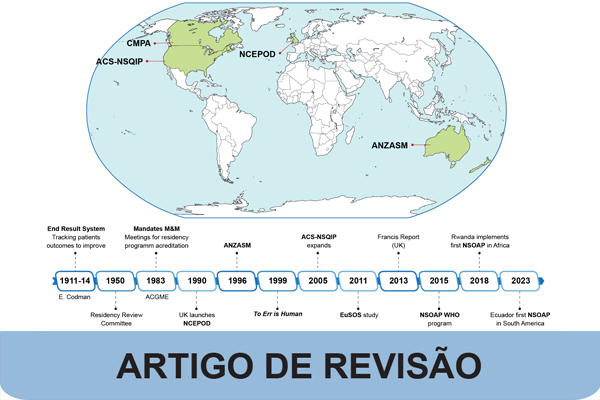
Morbidity and mortality meetings were originally conceived as structured forums to improve surgical outcomes through reflective practice. Over time, they became institutionalized globally. However, in Portugal, no published evidence was found describing structured standards for morbidity and mortality meetings; available observations suggest that practices remain fragmented, unstandardized, and weakly integrated into clinical governance. The aim of this review to critically appraise the current model of morbidity and mortality meetings in Portuguese surgical departments and propose evidence-based reforms, drawing on successful international frameworks. This is a narrative review synthesizing historical developments, national regulations, and international models – such as the United Kingdom’s National Confidential Enquiry into Patient Outcome and Death, the National Surgical Quality Improvement Program, and Australian and New Zealand Audit of Surgical Mortality. This work highlights gaps in the Portuguese context and proposes a multidimensional reform strategy. Despite legal references to morbidity and mortality in Portuguese regulations, there is no unified national guidance on case selection, meeting governance, or implementation of corrective actions. Cultural barriers such as blame avoidance and hierarchical dynamics limit psychological safety and learning. In contrast, international programs offer structured, audited, and data-driven approaches that promote accountability, transparency, and system-wide improvement. Based on these findings, the review recommends national guidelines, risk-adjusted benchmarking, multidisciplinary involvement, protected meeting time, and formal follow-up systems. Additional proposals include autopsy integration, shared morbidity and mortality across institutions, and public reporting. Morbidity and mortality meetings in Portugal must evolve from symbolic practices into powerful tools for patient safety, institutional accountability, and continuous learning. This requires regulatory leadership, cultural change, and structural reform aligned with international standards.