SOCIAL MEDIA
Portuguese Medical Association's Scientific Journal

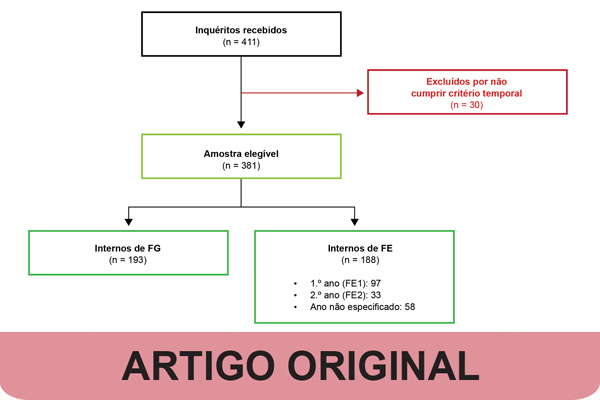
Introduction: Medical education must adapt to society’s needs, ensuring that the skills acquired by students align with those perceived as necessary for high-quality medical practice. The aim of this study was to assess the perceptions of medical trainees who graduated from University of Coimbra’s Faculty of Medicine between 2020/21 and 2022/23, currently working as foundation year or specialty trainee doctors, regarding competencies acquired during training. Secondarily, we aimed to evaluate differences across medical career stages.
Methods: We applied an online questionnaire (5-point Likert scale) covering five domains: general competencies, practical skills, emergency department performance, communication skills, and professional values. Descriptive and inferential statistics were applied.
Results: The sample included 381 participants (193 foundation year doctors and 188 specialty trainees). The highest-rated competencies were medical ethics, holistic patient approach, history-taking and clinical communication. Areas of perceived deficiency involved technical procedures, therapeutic management and prescribing, patient social navigation, palliative care, leadership skills and National Health Service organizational knowledge. Differences were observed between career stages in problem-solving, prescribing, team leadership and pressure management.
Conclusion: These findings highlight the need to restructure training and strengthen practical instruction and develop non-technical competencies, to better prepare future doctors for clinical challenges.
Click here for the full paper (in Portuguese only)